
AI's Memory Crisis: Why Your Next iPhone Could Cost $200 More
The tech industry is facing a memory chip crisis that will impact everything from smartphone prices to car production. AI data centers are consuming up to 70% of global memory supply, causing unprecedented price spikes and forcing companies like Tesla to consider building their own chip factories.
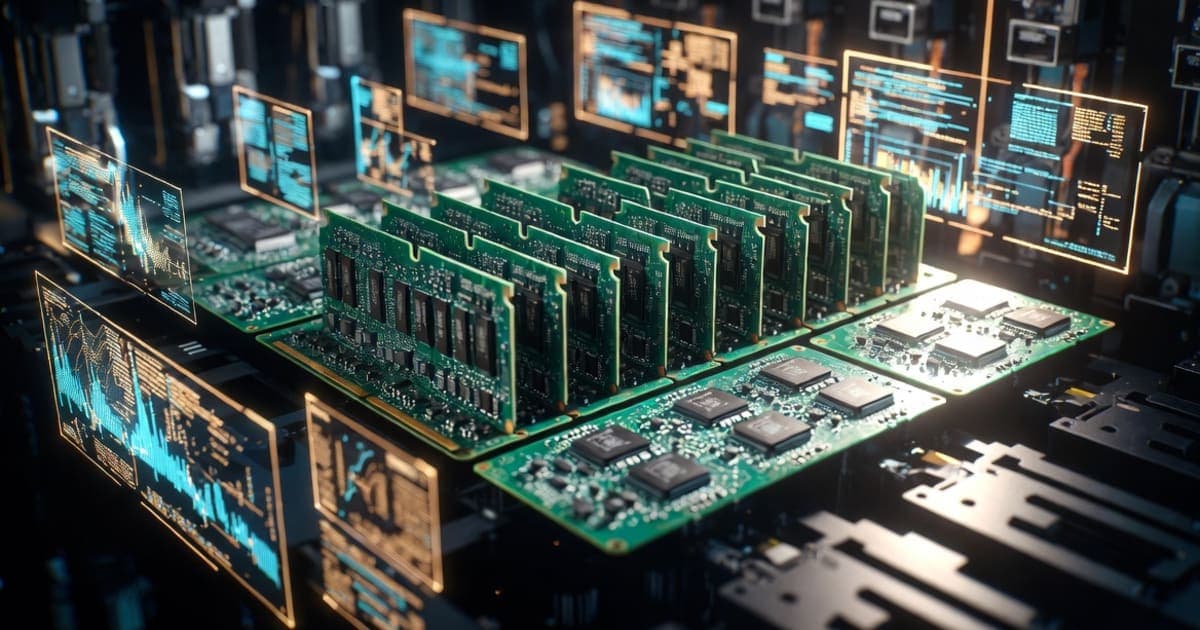
Most people won't see this coming until they're staring at a price tag.
Memory chip shortages are already constraining production at Tesla, Apple, and dozens of major companies — and the situation is moving faster than anyone expected. This isn't a temporary hiccup. It's a fundamental shift in who gets memory chips, and who doesn't.
What's Actually Happening
AI data centers are consuming memory at a scale the industry simply wasn't built for. Samsung, SK Hynix, and Micron — three companies that control roughly 90% of global memory production — have made a deliberate choice: pivot to high-bandwidth memory for AI accelerators, because the margins are extraordinary.
By the end of 2026, up to 70% of memory produced worldwide will go directly to data centers. Two years ago, that number looked completely different.
Your smartphone, laptop, and car's infotainment system all need DRAM. But they're increasingly not getting it.
The Numbers
DRAM prices have surged 80–90% this quarter. Some chip types jumped 75% in a single month — December to January alone. That's not inflation. That's a supply collapse.
Demand is growing at 20–30% annually. Supply is crawling at 16–17%. The math simply doesn't work.
For perspective: memory typically makes up 15–20% of a mid-range smartphone's cost. Analysts warn that could climb to 30% for budget devices. That $500 Android phone you had your eye on? Budget closer to $700.
Why This Time Is Different
Previous chip shortages came from manufacturing slowdowns or pandemic disruptions. This one is a strategic reallocation.
Nvidia's Blackwell AI accelerator ships with 192GB of RAM per chip — six times what a high-end PC needs. A single AI server system can carry 72 of those chips, with a combined 13.4 terabytes of memory. That's more than thousands of laptops combined.
Google, Microsoft, Meta, and OpenAI locked in their chip supplies through 2028. Everyone else is scrambling for whatever's left.
Real-World Impact
IDC warns the PC market could shrink up to 9%, with smartphone sales potentially dropping 5% in 2026. Apple's Tim Cook has already flagged that memory shortages will compress iPhone margins — which historically means prices go up, features get trimmed, or both.
The automotive sector is already in panic-buying mode. Cars are loaded with memory-dependent systems today — driver assistance, infotainment, electronic architecture. Some analysts are drawing direct comparisons to the production chaos of the pandemic years.
The Elon Musk Angle
Elon Musk recently declared that Tesla may need to build its own memory fabrication plant. He framed it bluntly: "hit the chip wall or make a fab." The proposed facility, called TeraFab, would handle logic, memory, and packaging under one roof.
Building a cutting-edge memory fab costs tens of billions of dollars and takes years. But the fact that a company like Tesla is seriously considering it tells you everything about how bad the supply situation has become.
When Does It Get Better?
Not soon.
Micron's new Idaho facility isn't expected online until 2027. Meaningful supply relief likely won't arrive until 2028 — and that assumes construction stays on schedule and geopolitics don't intervene.
SK Hynix already sold its entire 2026 production capacity back in October 2025. Micron has told some customers it can only meet about two-thirds of their medium-term needs.
The optimistic scenario? Prices return to 2024 levels by 2028, if everything goes right.
What This Means for You
If you're planning to buy a phone, laptop, or any tech device in 2026 — buy sooner rather than later. Prices are going up and availability is tightening.
For businesses in automotive, industrial, or consumer electronics — this is a strategic problem that needs attention now. Stockpiling, finding alternative suppliers, redesigning products to use less memory — all of it is on the table.
This is what happens when three companies control 90% of a critical global resource, and they all decide to chase the same high-margin customer at the same time.
The memory crisis isn't coming. It's already here.
Stay Updated
Join our newsletter for the latest tech news.
Related Articles

The "SaaSpocalypse": How Anthropic's Claude Plugins Triggered a $285 Billion Market Meltdown in 72 Hours
Autonomous AI agents are reshaping enterprise software economics, triggering investor panic and forcing SaaS companies to rethink pricing models.
How Close Are We To Robots That Actually Do Chores?
Humanoid robots look impressive on stage, but most “home chore” demos still rely on tele-operation and controlled environments. Real autonomous home robots are coming — just not as fast as the marketing says.