
How Close Are We To Robots That Actually Do Chores?
Humanoid robots look impressive on stage, but most “home chore” demos still rely on tele-operation and controlled environments. Real autonomous home robots are coming — just not as fast as the marketing says.
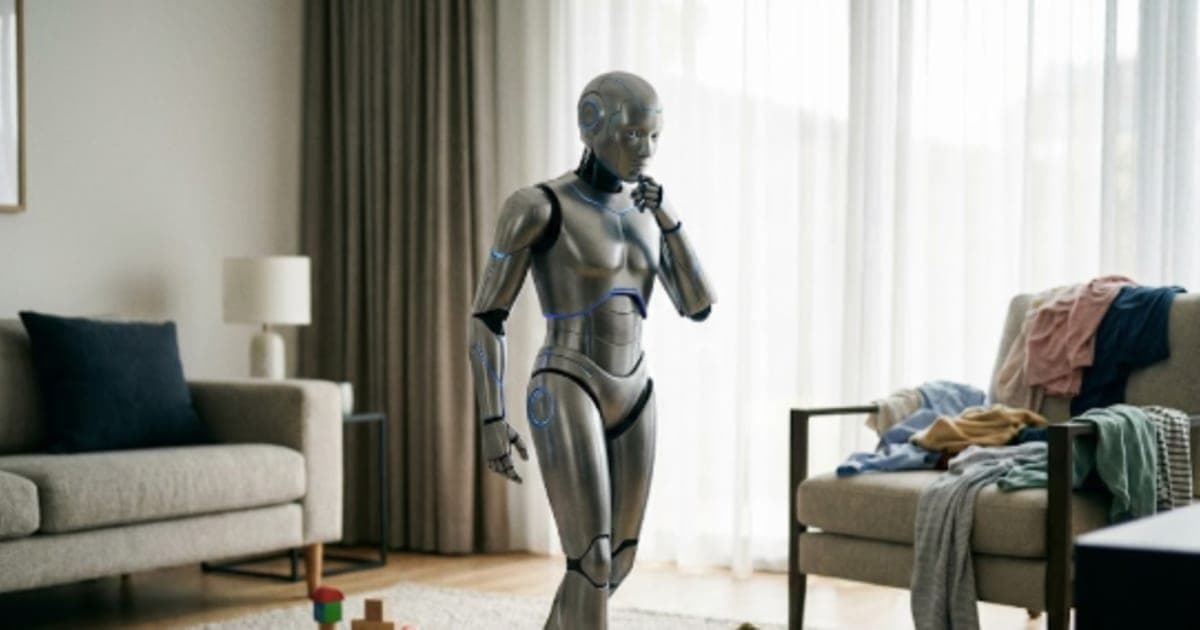
People keep sharing videos of humanoid robots doing laundry like it's solved. It's not solved. Most of it is staged or remotely driven. The real problem isn't folding clothes it's surviving in a normal messy home.
You've seen the videos. A sleek humanoid robot folds laundry, picks up toys, loads the dishwasher. Figure's demo looks clean. Tesla's Optimus moves smoothly. 1X shows theirs navigating apartments.
But watch closely. Many have a human operator behind the curtain. The robot isn't thinking.
Someone with a VR headset or controller is making it move. If a robot needs remote help every time something goes wrong, it's basically a mechanical Zoom call with arms.
Hype vs Reality: The Demo Problem
Humanoid robots have been everywhere at CES lately. Big tech keynotes featured them walking, gesturing, even "conversing." Figure, Unitree, Tesla Optimus, 1X they all had their moment. The narrative is consistent: robots will soon handle household chores while you relax.
But watch the fine print. Many demos run in controlled environments. Clean floors. Pre-positioned objects. Specific lighting. No pets sprinting across the room. No toddler throwing blocks at the expensive machinery.
The messy, chaotic reality of an actual home isn't part of the pitch.
Some companies are selling "home humanoids" for ~$20,000+. Some models are being positioned for developers at five-figure pricing, while consumer pricing is still unclear. That's not "mass adoption. " That's rich-people beta testing. A $20k robot isn't competing with Roomba. It's competing with hiring part-time house help and losing on reliability, flexibility, and trust.
Why Homes Are Harder Than Factories
Industrial robots work because factories are predictable. Assembly lines don't change layout daily. Parts arrive in consistent positions. The environment is designed around the robot.
Your home is the opposite of that.
Kids leave toys in random spots. Pets knock things over. Furniture moves. Cables snake across floors. Lighting changes throughout the day. A spill on the kitchen floor isn't scheduled or standardized.
And the worst part? Humans don't follow rules. Homes are built for people, not robots.
Factories solve for repeatability. Homes demand adaptability.
Current robots excel at narrow, repeated tasks in structured settings. They struggle when every day brings new configurations. Teaching a robot to recognize and handle thousands of household objects in infinite arrangements? That's exponentially harder than people assume.
And then there's terrain. Carpets, hardwood, tile, stairs, thresholds between rooms. Each surface requires different movement strategies. A robot that works perfectly on one floor type can fail completely on another.
The Tele-Operation Phase (And Why It's Not a Scam)
Here's where things get interesting. Many current "autonomous" robots aren't fully autonomous yet. They're tele-operated.
A human watches through cameras and controls the robot remotely. Think of it like a video game, but the controller moves a physical machine in someone's house.
This approach has a history in robotics research - it's sometimes called "Wizard of Oz" testing, where humans simulate AI capabilities to collect training data. It's a legitimate development strategy, not a trick.
To be fair, tele-operation isn't fake. It's how autonomy gets trained. Humans demonstrate tasks, robots record the actions, machine learning models learn patterns. Eventually, autonomy emerges from thousands of human-guided examples. But marketing it as "home-ready AI" is dishonest.
It's also not the promised future. If your $20,000 robot needs a remote operator in another country to fold your laundry, you've essentially hired a very expensive webcam-equipped intern.
Some companies plan to offer tele-operation as a service. You subscribe, and when the robot gets stuck, a human takes over remotely. That might work for specific tasks. But it raises obvious questions about privacy, latency, and whether this is actually solving the autonomy problem or just postponing it.
The tele-operation phase is necessary. It's just not the finish line. And I don't buy the "we'll be fully autonomous in 2 years" narrative. I've heard that timeline for a decade now.
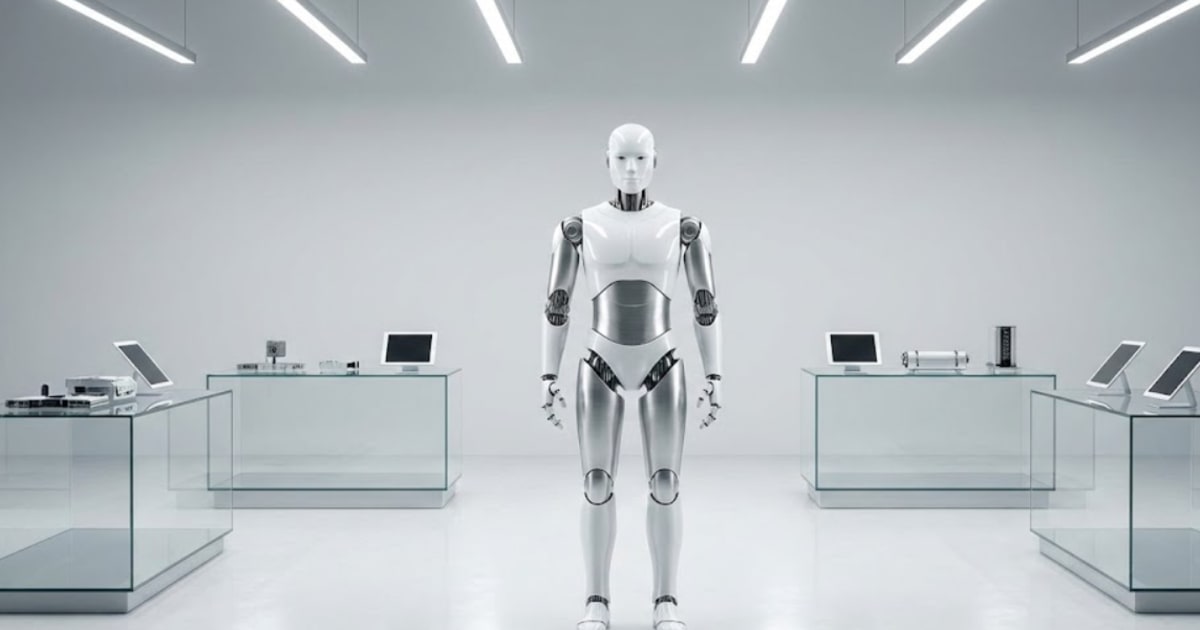
The Real Blockers: Safety, Privacy, Reliability, Cost
Safety comes first. A 50-pound humanoid robot moving around your home needs fail-safes. What happens when it drops something heavy? What if a child runs into its path mid-motion? Industrial robots operate behind cages for good reason.
Home robots can't use cages. They need real-time collision avoidance, force sensing, and emergency stops that actually work. Getting this right is hard. Getting it right 99.9% of the time isn't good enough when the 0.1% involves your kid.
There's precedent for why this matters. Consumer robots have faced recalls before - hoverboards caught fire, robot vacuums allegedly shared photos without consent, delivery robots blocked sidewalks and accessibility ramps. A humanoid robot has way more failure modes than a Roomba.
Privacy is the other landmine. These robots need cameras and sensors to navigate and identify objects. That means constant surveillance inside your home. Who sees that data? Where is it stored? Can it be hacked?
You might trust the company today. What about after they get acquired? Or breached? What happens when that footage of your messy bedroom ends up in a training dataset sold to third parties?
Reliability is brutal. A web app crashes, you refresh the page. A robot crashes while carrying hot coffee, you have a mess and possibly an injury. Physical failure modes are unforgiving.
And then there's cost. $20,000+ is early adopter territory. Mass adoption requires sub-$5,000 price points. Maybe sub-$2,000. That means massive manufacturing scale and significant component cost reductions. We're not there yet.
Tesla has hinted at eventually reaching a $20,000-$25,000 price point for Optimus at scale, but "at scale" is doing a lot of work in that sentence. Current prototypes cost far more to produce.
China vs US: Different Timelines, Different Risks
China is moving faster on early deployment. The approach is more aggressive. Get robots into homes sooner, iterate based on real-world usage, accept higher failure rates during the learning phase.
This could work. Faster iteration means faster improvement. More real-world data accelerates model training. Chinese manufacturers are also targeting lower price points through vertical integration and scale.
China will ship earlier. The US will lawyer-up earlier.
The US approach is more cautious. Liability concerns, safety regulations, and privacy expectations slow deployment. Companies want higher reliability before wide release. Nobody wants to be the first company with a viral video of their robot injuring someone.
There's no clear winner here. China might reach practical home robots first through sheer deployment velocity. The US might produce more reliable systems but arrive later. Or China could face a backlash if early robots fail dramatically in public ways.
Real scenario: Imagine a robot tasked with tidying a living room. There's a charging cable running to a laptop on the couch. Lego bricks scattered near the coffee table. A cat sleeping on the rug. The robot needs to identify which objects to move, which to avoid, and how to navigate without tripping on the cable, stepping on the cat, or mistaking the Legos for trash.
Current systems struggle with this level of environmental complexity. One wrong decision and you have broken toys, an angry cat, or a damaged laptop. The robot doesn't know your kid's favorite action figure from a piece of trash. It can't tell if that shirt on the floor is dirty laundry or tomorrow's outfit. These seem like small problems until you're explaining to your six-year-old why the robot threw away their beloved toy.
What Has to Happen Next
Better sensors. Current vision systems aren't good enough for the object recognition demands of home environments. Robots need to distinguish between a sock and a cat toy, between trash and a valuable item.
Improved manipulation. Grasping diverse objects with different shapes, weights, and fragility requires better gripper designs and more sophisticated force control. Folding a t-shirt is harder than picking up a rigid part on an assembly line.
Smarter planning. Robots need to handle interruptions and adapt on the fly. If a task becomes impossible, they should recognize it and move on rather than getting stuck in a loop.
Edge AI. Processing needs to happen on the robot, not in the cloud. Latency kills responsiveness. Privacy concerns demand local processing. This requires more powerful onboard compute.
Standardized home integration. Robots need to work with smart home systems, understand floor plans, and coordinate with other devices. Right now, every company builds proprietary solutions.
And honestly? Better business models. Subscription-based tele-operation feels like a band-aid. Companies need to figure out what people will actually pay for versus what makes good demo videos.
Practical Take: Next 12–36 Months
Expect more tele-operated systems marketed as "AI-assisted." These will handle specific tasks like laundry folding or dish loading, but with human oversight.
Industrial and commercial deployment will accelerate. Warehouses, hotels, hospitals. Controlled environments where the ROI math works and failure costs are lower than in homes.
Price points will start dropping for basic models. Maybe $15,000 by late 2026. Still expensive, but moving toward broader accessibility.
True autonomy for complex household tasks? Not in this timeframe. You'll see impressive demos. Some early adopters will buy expensive robots that work okay in ideal conditions. But reliable, unsupervised home robots that handle everyday chaos without remote assistance? That's still 5-10 years out, realistically.
I've worked with web apps, and even caching bugs are painful. Now imagine physical hardware failing in a messy apartment. A software error means you refresh. A robotics error means your floor is covered in broken glass, or your pet is terrified, or your expensive equipment is damaged. That's why "robot chores" is still hard. The stakes are physical. The environment is hostile to automation. And the cost of failure is measured in real-world consequences, not error logs.
If You're Building in Robotics, Focus on This
Narrow use cases first. Don't try to build the everything robot. Solve one task extremely well. Dish loading. Laundry folding. Floor vacuuming (though Roomba already won that one).
Invest in simulation. Real-world testing is slow and expensive. Photorealistic sim environments let you test millions of scenarios safely.
Plan for degraded performance. Your robot won't work perfectly. Design for graceful failures. When it can't complete a task, it should communicate clearly and retreat safely. "I don't know what to do with this" is better than silently breaking something.
Prioritize safety and privacy from day one. These aren't features you add later. They're foundations. Skimp here and you'll face lawsuits or regulatory shutdown.
Build for serviceability. Hardware breaks. Design so components can be swapped easily. Your robot will need repairs.
Signs a Home Robot Is Actually Real
Here's your checklist for evaluating whether a home robot is legitimate or just expensive vaporware:
It works in cluttered, chaotic environments. Not just clean demo rooms. Show me it handling a teenager's bedroom.
It operates without remote assistance. If a human operator takes over when things get hard, it's not autonomous.
It handles interruptions gracefully. Pets, kids, unexpected obstacles. The robot adapts or safely stops.
Failure modes are documented and safe. What happens when something goes wrong? Is there a clear answer?
Privacy controls are transparent and local. You control the data. Processing happens on-device when possible.
The price reflects actual value, not just hype. Can you justify the cost based on tasks it reliably completes?
It's been tested in real homes for months, not days. Long-term reliability matters more than demo day performance.
Until robots meet most of these criteria, treat the marketing with healthy skepticism. The future of home robots is coming. It's just not here yet. And it's going to take longer, cost more, and work differently than the glossy keynote videos suggest.
The companies pushing hardest Tesla, Figure, 1X, Unitree are making real progress on hardware and manipulation. But the gap between "works in our lab" and "works in your living room every single day" is massive. We're still in the early innings.
Sources & References
Primary source: Watch on YouTube
Company information:
Figure AI official website and public demonstrations
Unitree Robotics G1 specifications and pricing
Tesla Optimus development updates
Technical background:
Wizard of Oz methodology in human-robot interaction research
ISO 13482:2014 - Safety requirements for personal care robots
Stay Updated
Join our newsletter for the latest tech news.
Related Articles
AI's Memory Crisis: Why Your Next iPhone Could Cost $200 More
The tech industry is facing a memory chip crisis that will impact everything from smartphone prices to car production. AI data centers are consuming up to 70% of global memory supply, causing unprecedented price spikes and forcing companies like Tesla to consider building their own chip factories.

The "SaaSpocalypse": How Anthropic's Claude Plugins Triggered a $285 Billion Market Meltdown in 72 Hours
Autonomous AI agents are reshaping enterprise software economics, triggering investor panic and forcing SaaS companies to rethink pricing models.